NZ welcomes the global avocado community ahead of WAC2023

New Zealand’s growing avocado industry will take the spotlight in April 2023 when New Zealand hosts the World Avocado Congress for the first time ever. With a global avocado market worth approximately $8billion (USD) in 2020, and expected to grow to $17billion (USD) by 2025, the World Avocado Congress has become the most prestigious global event to celebrate the avocado sector.

Jen Scoular, CEO of New Zealand Avocado and President of the World Avocado Congress Committee, says that after the challenges of the global pandemic, New Zealand is delighted to welcome the global avocado community to our shores to showcase our industry and our beautiful country.

“Borders are reopening. Tickets are live on our new website. New Zealand and the avocado sector is open for business and we invite you to join us for the 10th World Avocado Congress in April 2023,” she says.

Taking place from 2-5 April 2023 at the Aotea Centre in Auckland, the World Avocado Congress is anticipated to attract over 1000 people from 50 countries, including some of the brightest minds in avocados; international growers, researchers, marketers, retailers, tech innovators and investors.

“The World Avocado Congress will showcase New Zealand’s leadership in avocado growing, sustainable environmental practice, beautiful orchards, ethical work treatment and great tasting avocados. We’re excited to have the scientific, technical and marketing brains of the global avocado community in NZ, sharing their knowledge, hearing about our industry, and being part of the collective approach seeking to increase both supply and demand of avocados.”

“This is also a once in a lifetime opportunity for New Zealand’s avocado community to access global avocado experts and apply this knowledge to New Zealand’s unique avocado growing conditions and challenges. “

Super earlybird tickets are now available on the World Avocado Congress website wacnz2023.com. Information regarding exhibition space, abstract submission, accommodation, sponsorship packages and field day bookings can also be found on the website.

The congress will include a three day academic programme with international keynote speakers. Topics will include sustainability, production and productivity, breeding and genomics, pest and disease management, extension, agritech, post-harvest supply chain, nutrition in human health and international reports. Regional field days will take place prior to the event.

“Conversations remain ongoing regarding sponsorships and event partnerships, so don’t hesitate to get involved!” says Ms Scoular. To date, Mission Produce – one of the largest avocado growers and marketers in the world – joins as the first global foundation partner. New Zealand sponsors include Darling Group, Avoco, Radfords Software and Seeka. Event partners include Plant & Food Research, Auckland Unlimited, Tourism New Zealand and Horticulture New Zealand.

In 2019, New Zealand won the bid to host the 10th World Avocado Congress and was up against Mexico, the largest avocado exporter in the world, and Kenya, the sixth largest exporter of avocados globally. Held every four years, previous congresses have been hosted in Colombia, Peru, Australia and Chile.

New Zealand has nearly 5,000ha of avocado orchards and contributes 2% of global avocado production. It is the world’s ninth largest avocado exporter.

Over the past financial year, New Zealand’s avocado industry value increased significantly to $234million (NZD), with record values achieved in both export and the New Zealand market from 8.2M trays harvested.

Visit wacnz2023.com for more information.

This article was provided for the Guacamole of 24 June 2022.

Ministers need to assist hosting benefits of renewables

A new report argues that energy ministers will need to increase the benefits to regional communities that host large-scale solar, wind and transmission infrastructure if governments want to ensure continued support for renewable energy.

The report is published by the Australia Institute and the Sydney Environment Institute and will be launched by independent NSW MPs Alex Greenwich and Dr Joe McGirr today (Wednesday, 15 June.)

The report authors endorse the decision by governments to establish Renewable Energy Zones (REZs) across regional Australia to replace retiring coal-fired power and expand generation capacity. Field trips and research interviews were conducted in Australia’s first two REZs: Central-West Orana and New England.

The authors found that although renewable energy enjoys a high level of community support, if the pace and intensity of development are not carefully managed and local benefits maximised it will risk creating conflict that could delay the clean energy transformation and harm energy security.

The report finds that governments can increase financial benefits for local communities, target First Nations participation, reduce negative impacts, and coordinate more sustainable economic development beyond short-term construction booms.

The Australia Institute’s Dan Cass said: “Our research is timely because the new Australian government has promised to spend $20 billion to subsidise 10,000km of new transmission lines which will unlock huge private investment in generation and storage in REZs.

“The federal government has been instantly thrust into an energy crisis but if it works quickly with state governments to design a fair system for planning and developing REZs it will be the last energy crisis Australia ever has to face.”

University of Sydney Emeritus Professor Linda Connor said: “This report highlights that the shift from coal to renewables is also a spatial shift that brings many physical and social changes to regional communities.

“This infrastructure is urgently needed for energy security and to reach zero emissions electricity, but we need to ensure it creates value for hosts. An unprecedented level of community participation, social impact assessment, and sustained local benefits is required.

”Riikka Heikkinen said: “Australia’s vital shift to renewables will proceed more quickly and ultimately at lower cost if it is better calibrated to share and amplify the economic benefits for regional communities that will host tens of billions of dollars worth of investment.”

“We have to make sure the communities that are providing us with the path to clean energy security are also communities that are benefiting fairly from the change.
ANU’s Dr Rebecca Pearse said: “In many instances regional communities are benefiting greatly from new renewable energy projects, like farmers being paid to host solar farms on relatively unproductive paddocks. But there have also been instances where communities have been disrupted by things like transmission lines being built across private land.

“Regional Australia is doing the country a terrific service by hosting our shift to renewable energy, so we need to make sure those communities have the mechanisms to negotiate beneficial deals for themselves.”

Key recommendations for energy ministers

  • Improve benefit sharing:
    • More inclusive and generous benefit sharing arrangements, which should also include new transmission infrastructure.
    • Encourage the pooling of community funds from energy developments in each REZ to enable funding of larger-scale facilities and programs that benefit diverse host communities.
  • Target First Nations participation
    • Create stronger processes for culturally appropriate consultation and inclusion of Traditional Owners in all aspects of REZ development to maximise socioeconomic benefits.
  • Manage cumulative impacts
    • Governments can work with residents and local agencies to schedule when and where projects are built to minimise negative cumulative impacts.
  • Coordinate economic development
    • REZ frameworks for multisectoral economic planning can help deliver employment, skills and other sustainable benefits to host communities.

The four co-authors are affiliated with the Australian National University, University of Technology Sydney, University of Sydney and The Australia Institute.


[end]

This article appears as part of the collection of articles that are prepared for the 24 June 2022 edition of Guacamole.

Hort Connections attracted thousands to Brisbane Convention Centre

AUSVEG and the International Fresh Produce Association Australia & New Zealand united to deliver the joint industry conference and Trade Show, Hort Connections 2022 this week. The event catered to buyers and sellers from every segment of the fresh produce and floral supply chain including seed companies, growers, packers, processors, shippers, importers and exporters, wholesalers and retailers, foodservice, associated suppliers to the industry, and more. The event organisers are keen for this event to become the most influential space for networking, education and business for the entire fresh produce industry. The turn out this week was very positive and shows that the various industries involved are keen to be well represented.

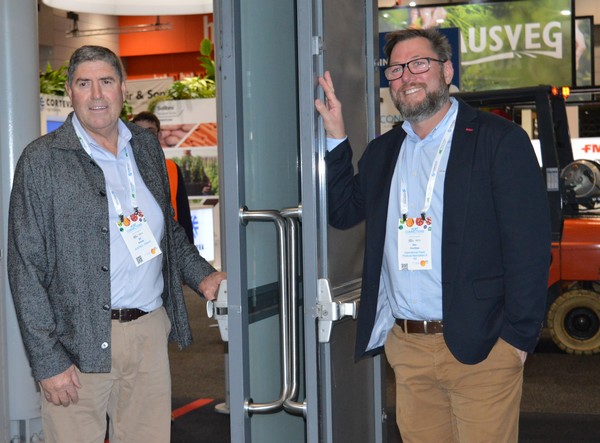
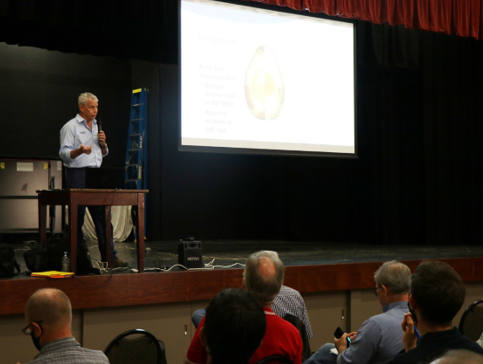
Above are, Bill Bulmer Aus Veg Chair and Ben Hoodless IFA ANZ Chair who opened the event.

There was a diverse range of different sessions on offer at the conference this year with session topics such as “Diversity & Inclusion/Women In Horticulture”, as well as the usual streams for “Supply Chain and Consumers”, and “Growing and Farming”.

The Avocados Australia team was busy networking at the conference with growers and Industry. The conference is a great opportunity to connect with new and current technologies and services and the Awards of Excellence aim to recognise the achievements of best practice. Avocados Australia was proud to see a number of avocado industry members making the finalists’ list. Our heart felt congratulations go to Annaleise and Lachlan Donovan for winning the Syngenta Grower of the Year Award. This was well deserved.

This article was provided for the Guacamole of 10 June 2022.

Australia’s Best Avo Toast Competition

And the winner is… 🥁🥁🥁

Little Hideout Cafe ✨🥑🏆

The Australia’s Best Avo Toast competition commenced in June and Avocados Australia is pleased to announce the winner just in time to celebrate National Avocado Day that happens on Sunday 31 July.

Little Hideout Café, based in Balmoral in Brisbane (2/185 Riding Road), is the winner of the 2022 Australia’s Best Avo Toast competition with their stunning avocado dish.

The high calibre of all the dishes that were entered made judging particularly difficult. However, in the end, the choice came down to the quality of the avocado and how well avocado was heroed in the dish. All 10 finalists are featured below.


WINNER

Little Hideout Cafe – Balmoral, QLD

The winning dish features a generous amount of sliced fresh avocado on top of a slice of “Wild Grains” sourdough and served with roast tomato aioli. Piped balls of whipped fetta are dotted around the bread and are topped with thin slices of radish. A flamboyant smear of deliciously creamy beetroot hummus surrounds the sourdough slice and then the whole dish is topped with sprinkles of homemade Dukka. The dish is priced at $16.90.

2/185 Riding Rd, Balmoral QLD 4171 Directions
Store no: 0401646685


FINALISTS

Guyala Cafe

Guyala Cafe – Cairns, QLD

Guyala Cafe’s indigenous, tropical take on the classic with layered flavor and texture. Smashed avocado on Dino’s wood-fired ciabatta with finger lime, lemon myrtle, dried mango, macadamia and coconut dukkah. Topped with cherry tomato, coconut-based feta, Shichimi pepper, coriander and chilli threads.

2 Smith St, Cairns North QLD 4870 Directions
Store no: 0450582040


Barbetta Cucina

Barbetta Cucina – Paddington, NSW

Smashed avocado, fior di latte, cherry tomato and basil served on sourdough. Add a poached egg or San Daniele prosciutto.

2-8 Elizabeth St Paddington NSW 2021 Directions
Store no: 0293310088


Faraday's Cage

Faraday’s Cage – Fitzroy, VIC

Freshly smashed avocado served on house-baked sourdough toast with mint, dill, parsley, crispy kale, watermelon radish, red vein sorrel, toasted mixed seeds, Meredith’s goat cheese and a wedge of lemon.

325-329 Gore St, Fitzroy VIC 3065 Directions
Store no: 0385891568


Nodo

Nodo – Newstead, QLD

Nodo house baked seeded sourdough, avocado, organic labneh, watermelon balsamic, watermelon radish, sea parsley, and black sesame furikake.

See website for all store locations
1 Ella St, Newstead QLD 4006 Directions
Store no: 0731844200


The Banksia Tree

The Banksia Tree – Port Adelaide, SA

Wood fire grilled sourdough from Rosies Rise, fresh avocado, pickled beetroot, house made native dukkah, smoked labneh, crispy saltbush, and native river mint.

147 St Vincent St, Port Adelaide SA 5015 Directions
Store no: 0870062624


Anouk

Anouk – Paddington, QLD

Mountains of smashed avocado on soft toasted Turkish with edamame and salad leaves, roast sesame seeds, and sesame ponzu dressing.

212 Given Terrace, Paddington QLD 4064 Directions
Store no: 0733678663


Kin and Co

Kin and Co – Teneriffe, QLD

Crushed avocado on two slices of local artisan bakery seeded sourdough with crispy spiced chickpeas, Meredith goat cheese, Yemeni pesto and maple roasted torched lemon cheek then finished with fresh herbs.

24 Macquarie St, Teneriffe QLD 4005 Directions
Store no: 0731844200


Bolton St Pantry

Bolton St Pantry – Newcastle, NSW

Smashed avocado with pickled onion, beetroot puree, feta cream, spiced walnut and lemon on sourdough.

45 Bolton St, Newcastle NSW 2300 Directions
Store no: 0240481344


Cinnamon and Co

Cinnamon and Co – West End, QLD

Smashed avocado on toasted pumpkin sourdough, beetroot relish, vegan fetta, pumpkin hummus, dukkah and lemon with balsamic glaze.


65 Hardgrave Rd, West End QLD 4101 Directions
Store no: 0403452917

Export Strategy – Impacting the future

The updated long-term forecast suggests Australia’s avocado production is expected to continue to increase to about 170,000 tonnes by 2026, more than double the 2020-21 crop. Finding a market for all this fruit is paramount and effort is underway to try to increase domestic consumption of avocados as well as increase exports (including opening new overseas markets).  The current avocado export strategy (2019-2021) has served the industry well. Avocados Australia is now developing a new Export Strategy (2022-2026) to guide market development over the next five years. With changing supply and market conditions, this is a timely opportunity. The new Strategy will identify, assess and prioritise international market prospects for Australian avocados and identify the required R&D and investment to realise these prospects.

As part of the project, Australian avocado growers, exporters, researchers and other stakeholders are invited to register their interest to have the opportunity to take part in a range of consultation activities that are planned to help inform the final Strategy. This includes access to:

  • Australian Avocado Export White Paper – review & comment (March-April 2022)
    • Draft Export Strategy – review & comment (May-June 2022)
    •    Export Forums (WA and SA) (May 2022)
    •    Export Strategy Webinar (May 2022)
    •    Export Strategy presentation at Avo Connections (June 2022)

To date background work has been undertaken to understand current Australian avocado exports, where the best export opportunities are for Australian avocados, and what work is required to access and successfully build these markets. The project will assess more than 16 international markets to assess their feasibility, and consider any market access requirements and associated R&D. Market development and promotion requirements are also being considered.

So how will the Avocado Export Strategy help avocado growers manage the forecast over supply of avocados?

The Export Strategy will provide guidance so industry can optimise commercial outcomes both in the short- and long-term, recognising the increasingly challenging and globally competitive environment in which it now, and in the future, will operate.

The Strategy will identify the best course of action to grow new markets that can cater for the rapidly increasing production volumes.

Key stakeholders for the project have been identified as Australian growers, packers, exporters, as well as supply chain partners (importers, retailers, food service businesses) and consumers in international markets.

Why is an Avocado Export Strategy important?

The Strategy is important to identify export development and growth priorities for the Australian Avocado industry and provide guidance to stakeholders so that they can plan for the future. This includes growers, exporters, researchers, Government, Avocados Australia, Hort Innovation and other key service providers.

The Strategy is to:

  • Guide export development activity by industry (and inform government), including market access prioritisation and development, industry export capability building, and international market development,
  • Be a resource for growers/exporters looking to develop their export capability, identify international market opportunities, and grow their exports,
  • Be a resource to inform effective R&D and marketing investments by Hort Innovation through levy or frontier funds in export development projects related to market access, industry capability, or international market development,
  • Provide data and information to support the development of business plans required for market access and improvement applications to the International Market Access Assessment Panel (IMAAP) (previously TAP). Note, development of business plans for market access and improvement applications are currently part of the Avocado market access and trade development project (AV20004).

Will the Avocado Export Strategy help avocado growers of all sizes?

Developing a strong export sector will help in maintaining sustainable prices in the domestic market.  Hence growers of all sizes should be looking to support the exporters so that they can deliver product that meets the market/customer requirements in terms of quality, phytosanitary and MRL compliance in international markets. We don’t expect all growers to have the capacity to become direct exporters, and we don’t propose that.  However, all growers should strive to produce avocados that are suitable for exporting and make a long-term commitment to support exporters who are working to develop export markets.  With the current supply projections through to 2026 and beyond, it is in the best interests of all growers that there is strong participation in all export supply chains available to the industry.

Why should I be involved in the development of the new Export Strategy?

Once approved the Avocado Export Strategy will be in effect from 2022 to 2026.  It will be an important tool for guiding the future direction of the industry and Avocados Australia is keen to ensure that the broader industry has a say on its development.

“This Strategy will impact the industry’s future so I would like to encourage growers, packers and exporters to take every opportunity to participate in the consultation process,” said John Tyas, CEO of Avocados Australia.

“We would like to use this consultation process as the opportunity to provide details around the current and expected industry performance.”

“We also want to understand the challenges that you all face as growers, packers and exporters, and identify the opportunities you believe that the Australian avocado sector should be pursuing.”

The project’s leaders would also like your insights and thoughts on how the industry can approach things differently so that they can get better outcomes for the whole sector.

A draft of the export strategy will be made available to Australian industry stakeholders (who have registered their interest with Avocados Australia) in May and stakeholders will have until the beginning of June to respond. Look out for email notifications closer to the date.

The development of the Avocado Export Strategy 2022-2026 is being undertaken as part of the Avocado Export Strategy 2022-2026 (AV21000) project. This project has been funded by Hort Innovation, using the avocado research and development levy and contributions from the Australian Government. Hort Innovation is the grower-owned, not-for-profit research and development corporation for Australian horticulture.

To register to take part in the consultation process email co@avocado.org.au with your contact details.

For more information about the project, or to provide input, contact John Tyas (email j.tyas@avocado.org.au or call 07 3846 6566) or alternatively contact Jenny Margetts (P2P Business Solutions) email jenny@p2p.net.au or mobile 0418 215 276.

AvoData – New Contributors

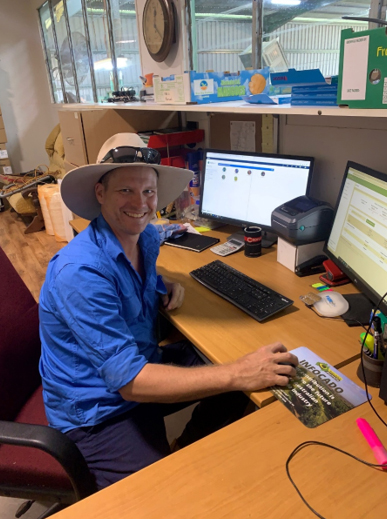
The AvoData system continues its development

To date, the team has visited North Queensland, Central Queensland and South Queensland to onboard new packers onto the AvoData system.

We are also pleased to announce that in the second quarter of 2022 we are introducing a mobile application that will enable users to submit their Infocado figures and view reports on-the-go without needing to log onto the desktop version.

The enhancements aim to make the experience as frictionless as possible for users, and we will keep refining the system to minimise the effort needed for participants.

The importance of high industry participation

For the industry as a whole to fully utilise the potential of Infocado and be able to manage the supply of fruit, the data needs to be as accurate and complete as possible. However, the data that is reported via Infocado can only be as good as the data that we receive from all participating packhouses. Even though we regularly verify the accuracy of Infocado data with levy receipts from the federal government, there is room for improvement when it comes to the accuracy of month-to-month volumes, which can only be addressed by increasing the participation rate in each region.

The more data that we collect by direct input from packhouses, the higher the confidence in the data, and in turn the effectiveness of industry planning.

North Queensland

In these terms, North Queensland has been traditionally the region that represented our biggest challenge: it is one of our largest region by volume of fruit produced at around 6 million trays annually currently, with the largest proportion of young trees.  It also has the largest number of independent mid-size packing operations of all regions.

Until recently, the weekly participation rate (via direct contribution) was always below the mark at around 72% of fruit volume. This would make it necessary to model what 28% of the region was packing week to week.

While the total volumes reported have been consistently accurate, that modelled proportion would not account for week-to-week changes that occur during the season However, with participation rates now approaching 90%, the weekly data is much more complete.

The Infocado team was in North Queensland in February 2022 onboarding packers in the region onto the new system ahead of the season commencement. This involved demonstrating the new system, discussing with packers how to interpret the Infocado reports and establishing what insights would be most valuable to their business. It was valuable to hear directly from packers what insights would be most helpful to their business moving forward, so this can be factored into the system development. Some ideas included:

  • Expressing the 4 weekly forecasts by region and/or variety
  • An indication of volume building up in the system
  • Other minor systematic changes to improve the system for industry

It was clear that packhouses see the benefits of contributing to Infocado and having access to the reports and information to assist making decisions in their season and guide conversations with their supply partners. In addition to the standard report, the new system has increased functionality to allow packers to generate bespoke reports specific to their needs and export their own data to excel.

Ensuring we have tools to enable contributors to enter their data efficiently and quickly, remains a key priority for Avocados Australia. The AvoData App will achieve this through enabling contributors to enter their figures and view reports in the app for those who prefer to use this platform over the desktop version. Currently, the app is developed and undergoing internal testing prior to the pilot phase with a select number of packers. We look forward to releasing it to our contributors for use in the near future.

What’s next for the AvoData System Rollout

We will continue taking strides to narrow the gap and bring the national participation rate as close as possible to 100%. With the recent opening of state borders, we can now carry on with this effort to other regions. Our next priority will be to address the participation gap in the Tristate region. The Tristate region has been growing fast, expected to produce  well upwards of 1 million trays per season, and participation rate is proportionally the lowest at about 53%. We will be reaching out to current non-participating packhouses in the area, and hopefully we can get that number as close to 100% as possible.

Acknowledgement

The activity reported in this article is an initiative of the Avocado industry and market data capture and analysis project (AV20000) which is funded by Hort Innovation, using the avocado research and development levy and contributions from the Australian Government. Hort Innovation is the grower-owned, not-for-profit research and development corporation for Australian horticulture.

SQ Regional Forum a success

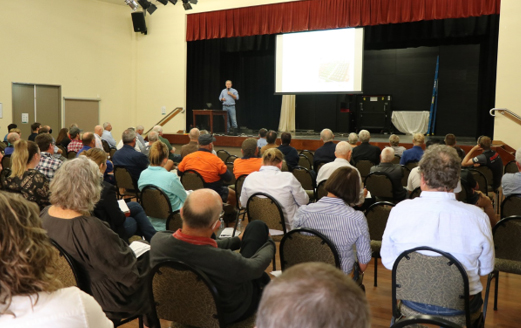
One hundred industry stakeholders met at Crow’s Nest last month for the South Queensland Regional Forum. The key presentations of the forum were made by Harley Smith (CSIRO) and related to further understanding impacts on fruitset and fruit abscission. A discussion panel further added to some of the key issues attendees were keen to learn more about. Key take home messages from the presentations and panel included:

• Adequate carbohydrate levels in the tree (including the flower) each year are essential to set and retain fruit and minimise alternate and irregular bearing
• A relative humidity of 75% is optimum for pollen viability and pollination
• Reducing summer abscission has the potential to increase tree productivity by 24% or more.
• Encourage alternative pollinating insects by promoting biodiversity in the orchard: plant pollination gardens alongside the orchard, extend the interval of interrow slashing to allow the sward species to flower etc
• Things that can help pollinating insects include overhead misters (for cooling and increasing humidity) and avoiding the use of pyrethroids
• Research is being conducted in WA to ‘domesticate’ certain species of blowflies so they can be released into the orchard as pollinators at flowering

Other presentations included Ebony Faichney (DAF) speaking on the current threats and future directions of avocado pest management (AV19001), and John Agnew (DAF) who provided an update on the fruit quality supply chain project (AV18000). John Tyas (AAL) also spoke about quality challenges in his industry update.

Above: Ebony Faichney from Department of Agriculture & Fisheries talked about Managing Avocado Pests.

Ebony Faichney reported that a continued overuse of broad-spectrum insecticides could lead to a crisis in pest control through development of pesticide resistance, elimination of beneficial insects and emergence of secondary pests. Softer insecticides (e.g. Sivanto, Transform and Trivor) should be used in the first half of the season to prolong the valuable effects of beneficial insects as long as possible. If broad-spectrum insecticides need to be used, growers should try and delay their use as long as possible.

Above: John Agnew from Department of Agriculture & Fisheries presented on fruit quality in the supply chain.

John Agnew reminded attendees that regular pre-harvest fungicide sprays (applied with well-calibrated sprayers that achieve good coverage of the whole tree) as well as a post-harvest fungicide treatment are essential to prevent body rots at the end of the market chain. He also confirmed that packshed departure temperatures of fruit are often too high and variable, with Hass fruit needing to be at 7°C. John Tyas reported that fruit quality declined in all regions last year – thought to be mainly due to the oversupply resulting in fruit being in the supply chain longer with the inevitable loss in quality as it got older. With the expected doubling of production within the next five years he indicated that there will be no market for 2nd grade fruit, and that fruit destined for export will have to be particularly robust. Accurate forecasts and good communication up and down the supply chain will be essential.

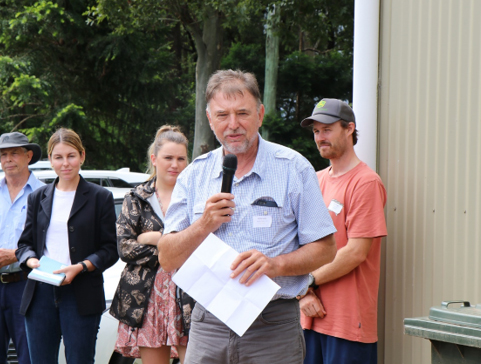
Above: At the beginning and during the orchard walk Bill Kereczko provided an overview of the approaches being used in his orchard at Ravensbourne.

Bill and Kathy Kereczco hosted a field walk at their orchard at Ravensbourne. One of the biggest challenges that Bill discussed was establishing and keeping replant trees alive in spaces where older individual trees have died. This is a common problem in most growing regions of Australia where Phytophthora root rot was most likely the cause of the loss of the original trees. Pathologist Liz Dann was able to list some of the recommended measures to combat root rot in replants:

  • fallow the ground for a year or more
    • establish good planting mounds
    • apply phosphorous acid and metalaxyl
    • mulch to improve soil organic matter and microbiology
    • order replant trees on rootstocks with some tolerance to root rot such as Dusa® and Velvick.


Minister of Agriculture announces AgTech roadmap

The Minister for Agriculture and Industry Development and Minister for Rural Communities has officially announced the development of an AgTech roadmap for Queensland led by the Department of Agriculture and Fisheries (DAF). Digital technology creates an abundance of opportunities to add value to the agricultural sector by working more precisely, efficiently and sustainably. It offers innovative ways to connect producers to consumers, reduce problems related to remoteness in rural communities, and attract the next generation to jobs in the industry.

This roadmap will lead and shape Queensland’s strategic direction for AgTech development and accelerated adoption. DAF has engaged BDO Services Pty Ltd to provide support with the consultation and development of this roadmap.
Key to the creation of the roadmap is collaboration and input from stakeholders and parties across the AgTech ecosystem. As such, we invite you and your stakeholders to get involved by participating in the online collaboration hub, completing the AgTech survey or attending one of the face-to-face forums planned across Queensland.

• Toowoomba (Thursday 19 May 2022)
• Bundaberg (Friday 20 May 2022)
• Cairns (Monday 23 May 2022)
• Mackay (Tuesday 24 May 2022)
• Emerald (Wednesday 25 May 2022)
• Longreach (Thursday 26 May 2022)
• Brisbane (Tuesday 7 June 2022)

The Brisbane workshop will explore the insights gathered throughout the consultation process to date.

Get involved via this link: https://bdoau.checkboxau.com/daf-agtech-roadmap

This article was provided for the Guacamole of 13 May 2022.

RD&E Coordination

Avocados Australia (AAL) strives to ensure that the avocado research, development and extension (RD&E) program is well coordinated, responsive to industry needs and delivers on industry expectations. One of the ways we do this is through the Avocado industry RD&E Coordinator project (AV22012) that funds AAL’s RD&E Coordinator role.

The avocado R&D levy investment is significant and straddles many portfolios within Hort Innovation, in line with the Avocado Strategic Investment Plan 2022-2026. Through this role AAL can have further impact on, and improve, R&D network coordination, ensure the delivery of “fit-for-purpose” R&D products, ensure better research resource use efficiencies and faster realisations of R&D outcomes. This role also supports the extension of avocado R&D to industry.

Avocado Industry Extension

The planning and implementation of the extension of Australian avocado industry R&D is currently supported by the AAL RD&E Coordinator, the Australian Avocado Industry Extension Strategy (AAIES) and the Avocado industry development and extension project (AV23010).

The resources available below are recommended for project service providers to use, to assist the Australian avocado industry to attain its objectives for practice change across a range of priority areas.

The Australian Avocado Industry Extension Strategy 2023-2027, has been developed to map out the priority extension strategies required to meet the challenges of the rapidly increased scale of production in Australia over the last decade.

The intention of the strategy is to provide a guide that offers direction and coordination for extension and training along the entire Australian avocado industry supply chain. It will enable resources and relationships to be better positioned to deliver on critical needs over the next 5 years.

AAIES (2023-2027) ‘On Track’ Assessment – 2025 Midpoint Review Draft Summary Report

This report provides ‘on-track’ assessments of practice change service objectives outlined in the Australian Avocado Industry Extension Strategy (AAIES) 2023-2027 – Transition to 2027. These summary assessments are a result of a strategy midpoint review conducted in August – September 2025.

Australian Avocado Industry Extension Strategy 2023-2027

Extension Strategy Model & Glossary

AAL Extension Planning Guide

This guide was developed following a key recommendation from extensive consultations during the creation of the Australian Avocado Industry Extension Strategy (AAIES) in 2022. The purpose of the guide is to add value to the project planning and design process, by encouraging thorough planning and alignment of extension activities in R&D proposals with the AAIES’s priority areas. Thereby increasing the quality of proposals submitted for consideration as industry investments.

Intended Users
The guide is primarily designed to be used by and to support service providers:
• Service Providers: To use as a resource when responding to RFPs to enhance project outcomes.
• RD&E Coordinator: To provide support to service providers using the guide.

The guide may also provide context to other stakeholders in the following ways:
• Process Owners: To consider when developing Investment Recommendations and
Request for Proposals (RFP).
• Evaluation Panels: To consider when evaluating project proposals.
• Existing Delivery Partners: To review and adjust the delivery of extension activities.


Avocado industry development and extension project (AV23010) seeks to inspire adoption of best practice in priority practice change areas identified and endorsed by growers and industry stakeholders during the Australian avocado industry development and extension project co-design workshop held in May 2023.

The focus areas include disease management, nutrition management, pest management, irregular and alternate bearing, irrigation management, and propagation practices.

The program aims to achieve participation from 60 per cent of all grower entities, representing more than 70 per cent of the total Australian avocado production.

The project team will employ various strategies to encourage adoption, including face-to-face events, masterclasses, practical workshops, technical content, and effective communication through a technical newsletter, the industry communications project and the Best Practice Resource website.

The two face-to-face annual events that will be delivered in each of the regions will include:

1. A practical ‘best practice workshop’ focused on delivering information on the identified priority practice change areas and is designed to cater to less experienced growers and staff. These workshops will prioritise key messages and adopt an informal approach to facilitate meaningful discussions and engagement.

2. A regional forum will focus on delivering grower-ready R&D outcomes in priority practice change areas. An industry update, provided by Avocados Australia staff or the regional director, will also be included in the agenda. These forums will be tailored for more experienced growers and staff.

The program will also deliver a host of other activities to support the development of the avocado industry.


The six key regions and regional lead for annual grower events and regional networks are:

David Bin | NQ regional lead
0476 528 302
david.bin@dpi.qld.gov.au

Renata Grunennvaldt | CQ regional lead
0475 855 445
renata.grunennvaldt@dpi.qld.gov.au 

Shanara Veivers | SQ regional lead
0408 371 054
shanara.veivers@dpi.qld.gov.au

Steven Falivene | Tristate regional lead
0427 208 611
steven.falivene@dpi.nsw.gov.au

Isabella Ellmers | CNSW regional lead
0431 125 513
isabella.ellmers@ahr.com.au

Rachelle Johnstone | WA regional lead
0423 114 972
rachelle.johnstone@dpird.wa.gov.au

Keep up to date with all the events and activities of the AV23010 published fortnightly as part of industry’s Guacamole newsletter.

For more information about the extension of Australian avocado research and development, please contact Avocados Australia.

Australian Avocado Irrigation Review overview

This article draws from content sourced from the Avocado Irrigation Review Final Report. The authors being Simon Newett, Bridie Carr and Ebony Faichney, Department of Agriculture and Fisheries, Queensland, and Liz Singh, Avocados Australia Ltd.
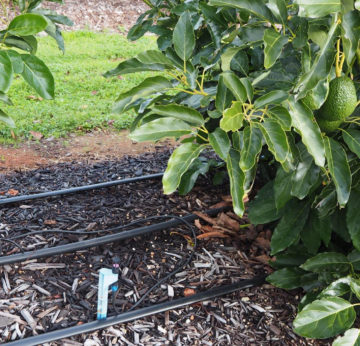
This photo appears courtesy of QDAF.


The Australian Avocado Irrigation Review (also referred to as an ‘Advanced Management Workshop’) is one of three reviews scheduled as part of the project “Avocado extension and development” project (AV17005).

The ultimate purpose of the avocado irrigation review is to provide information that will help improve avocado irrigation in Australia.

The review consisted of four components:

Part 1: Survey of current avocado practices in Australia
Part 2: Survey of international avocado irrigation trends
Part 3: Avocado irrigation literature review
Part 4: Face-to-face summit of key growers, consultants, extension staff and invited speakers to evaluate the information gathered and identify appropriate practices and research needs.

Participants in the summit were selected from expressions of interest to provide a good representation of irrigation knowledge and needs across Australia. They included key growers, consultants, extension staff and invited speakers.

All of the information gathered, and recommendations made will be used to guide future research, development and extension of irrigation across the Australian avocado industry.

A report called the ‘Australian Avocado Irrigation Review’ presents the information generated by the review. This report and more including presentations, a webinar recording of the key note speaker at the summit, and the 71-page literature review can be found on the Avocados Australia Ltd Best Practice Resource, simply type “Irrigation review” into the search box. It is located in the ‘Library’ section under ‘Event Proceedings’, ‘2021 Avocado Irrigation Review’


IRRIGATION CHALLENGES IN AUSTRALIAN PRODUCTION REGIONS

Challenges identified included:

  • Water availability and limited allocations
    • Deteriorating water quality
    • Infrastructure constraints
    • Soil variability
    • Range of different climates and climate variability
    • Design and capacity of old irrigations systems
    • Lack of education, knowledge and access to information
    • Poor soil quality
    • Labour skills and cost
    • Monitoring for decision making
    • Water use for optimal outcomes
    • Large numbers of small to medium growers and lack of knowledge
    • Drainage & erosion
    • Site selection
    • More efficient use of electricity and choice of the most suitable tariff.
  • Heat waves – stomata closing early
    • Low humidity
    • Adoption of drip irrigation and its management challenges
    • Over irrigation from the need to use overhead irrigation for frost control


WHAT WE CAN LEARN FROM INTERNATIONAL IRRIGATION TRENDS

  • Israelis conduct very good and ongoing irrigation research. Due to their shortage of water, they have adopted drip irrigation and learnt how best to use it.
    • The importance of a thorough soil survey of the site and careful land preparation, including drainage.
    • Chileans can get good irrigation uniformity, despite poor soils, by careful and extensive pre-plant land preparation.
    • Advanced irrigators practice a high standard of irrigation system maintenance which includes cleaning out irrigation lines as standard practice, most commonly with phosphoric acid.
    • Advanced irrigators are more proactive than reactive in irrigation scheduling and place importance on current and forecasted evapotranspiration.
    • As well as frequent referral to soil and plant monitoring tools, advanced irrigators also physically check soil moisture (with a spade or auger), often examining root health at the same time.
    • Israelis consider that the ‘winning combination’ for irrigation scheduling is to monitor both the soil and tree and interpret results together.
    • There is strong interest in ‘dashboard’ software that brings monitoring and weather information together.
    • Greater use of salt tolerant rootstocks.
    • Leaching irrigation practices where salinity is an issue are tailored to soil texture and the results from analysing soil and/or leaf mineral levels.
    • Awareness of the high oxygen requirement of avocado roots and the challenge this creates in trying to balance soil moisture and oxygen requirements.


KEY POINTS FROM UDI GAFNI’S PRESENTATION – ‘AVOCADO IRRIGATION IN ISRAEL’

Udi was one of the two keynote speakers at the irrigation summit, he joined via zoom from Israel where he is currently the chief agronomist with Granot, he also consults internationally and has previously worked in the Israeli department of agriculture as an extension officer.

A recording of Udi’s presentation is available on the Best Practice Resource.

The notes below are key learnings by the summit delegates from Udi’s presentation.

  • The bigger the root system the better
    • Even if you have a small root system, you need to have enough irrigation capacity for high demand – water demand is driven by the size of the canopy
    • Drip – there is apprehension in Australia about conversion to drip but the Israelis have learnt to do it
    • Israel was forced to make changes – lets follow their example in Australia
    • In dealing with saline water:

o Need to collect EC data (30cm root zone)
o Leaching practice is “horses for courses”

  • Drip irrigation

o Matching emitters to soil type, taking into account water quality
o Use certified irrigation designers (e.g. ‘Irrigation Australia’ approved)
o Learn from expertise in other crops

  • Irrigation is always evolving; practices need to be re-examined every 3-4 years
    • Israelis already use ‘dashboard’ software to integrate monitoring data for scheduling purposes, especially when they have dual systems (under tree & overhead)
    • We need to be less insular & look beyond just avocados
    • The literature review raised topic of soil aeration as new information, however in Israel this is common knowledge
    • Traditionally in Australia we water at night & at the weekend for lower tariffs, but power costs are not the only consideration. In Israel they irrigate when the crop needs water which is during the day. Daytime irrigation has reduced irregular bearing.
    • Drip irrigation requires a higher level of management. Need to predict 2-3 days ahead. Need to be proactive with drip, not reactive.

KEY POINTS FROM MICHAEL FORSTER’S PRESENTATION – ‘IMPROVING WATER USE EFFICIENCY WITH TECHNOLOGY’

Dr Michael Forster was one of the two keynote speakers at the irrigation summit and attended in person. Michael is a director of Edaphic Scientific and an Adjunct Senior Research Fellow at Griffith University.

The notes below are key learnings by the summit delegates from Michael’s presentation.

  • Dendrometers can measure down to 1 micron (one hair strand is 60 microns across).
    • Growers like simple guidelines and figures to follow.
    • Tensiometers provide a universal value that is applicable across a range of conditions. The development of the digital tensiometer is a significant breakthrough.
    • From a panel member who uses dendrometers:

o Good for picking up problems earlier.
o Greater insights and therefore confidence.
o Still likes simplicity.

  • From another panel member who uses dendrometers:

o Don’t use for planning.
o Helps with irrigation strategy.
o Interface is easy to use.

  • Dendrometers are explaining how fruit drop is related to weather events.
  • Sap flow:

o Sap flow measurements are explaining water use differences between cultivars in macadamias.
o In a PhD study in macadamias, sap flow gives a better understanding of water relations.
o Sap flow might stop even when roots are well supplied with water because stomata have closed.
o Can it be useful for studying the effect of salinity?
o Concept is good but caution advised for using sap flow meters commercially at this point, and they need to be more robust.

  • There was surprise about how high soil water soil tension values are in other crops to trigger irrigation compared to avocados. Avocados have a trigger value of about 14cB (7cB in Perth sands) compared to 58cB in macadamia, 150cB in apple/pear, and 386cB in citrus. Do we need to conduct research to verify the trigger value in avocado?
    • We need to develop crop factors for different environments around Australia.
    • There is an app available to measure leaf area.
    • Physiologically best to base crop factor on leaf area.
    • Sap flow readings:

o Need to know trunk size for understanding water usage.
o Need to be calibrated on farm (17 calculations).
o Need to know wood density & trunk diameter.

  • Sap flow meters can be put on petiole, branch, trunk, root. Change position every 3 months. Avoid injection sites.
    • Approximately $900 per sap flow sensor. Start with one block to get a feel & understanding for the technology. They can be integrated with other systems.
    • Tensiometers are easiest to understand. Other systems need more knowledge.


RECOMMENDATIONS FOR AUSTRALIAN GROWERS

Work with a combination of professionals (e.g. irrigation consultants and avocado agronomists)

Water supply & water quality

  • Ascertain volume of water available in good and bad years.
    • Limit size of orchard to the number of trees that can be irrigated fully. Avocados can’t be half irrigated.
    • Conduct water quality analyses and investigate the water quality history.

Soil properties

  • Undertake a thorough grid survey of the soil in order to produce a soil map to understand the site and plan accordingly. Set orchard block boundaries according to soil type. Design the irrigation system to suit the situation. The soil survey needs to include:

o Depths and soil texture of each horizon.
o Water infiltration rates.
o Readily Available Water (RAW) values (be aware that infiltration rates and RAW can change over time so re-measure every few years).
o Consider doing an electromagnetic (EM) survey but ensure that it is ground truthed.

  • Thorough and careful land preparation is needed to:

o Achieve good drainage (water must not pond anywhere).
o Prevent mixing subsoil with topsoil.
o Establish well-designed mounds, ensuring they do not dam water.

  • Drainage is critical for avocados and even more important if you also need to flush out salts, so conduct land shaping and install above and below ground drainage where necessary.

Irrigation design

  • Use an irrigation specialist certified by Irrigation Australia (source from Home page of www.irrigationaustralia.com.au) to design an irrigation system tailor-made for your situation.
    • Consult with experts to select the most economical electricity tariff arrangements but also consider tree water needs e.g. Israeli’s have discovered that irrigating during the day (when the tree is using water) reduces irregular bearing.
    • Forecast water needs for a year of peak demand and limit size of orchard to the number of trees that can be irrigated fully in a difficult year.
    • Determine water requirements in week of peak demand and ensure that the irrigation system and capacity can meet these requirements. Peak demand determines overall design.
    • Irrigation design is important to achieve uniform water delivery to each tree across the block.
    • The irrigation system needs to cater for local water and climate issues (e.g. frost, heat, water quality and availability).
    • Undertake ground truthing of specs.
    • Salt flushing and fertigation needs must be considered.
    • Learn how to better manage poor quality irrigation water – e.g. work out frequency and volumes of leaching irrigations needed.
    • Be prepared to review and accept new methods, concepts and technology. Use technology with an open mind.
    • Build flexibility into the system to account for future growth, higher or lower application rates, technical developments, and practice changes. Design a system that can be built upon.
    • Picture selling the block to someone else. Is the design simple, effective and easy to operate?

Irrigation hardware and maintenance

  • Establish a maintenance plan with weekly/fortnightly/monthly/6-monthly and annual tasks. This plan will include:

o Testing irrigation uniformity at least annually. Aim for a high standard, ensure uniformity and system performance is maintained. (There is an instructional video in the BPR called “Checking irrigation uniformity in avocado orchards”).

o Cleaning out irrigation lines at least annually e.g. with phosphoric acid.

o Filter cleaning.

o Regular testing of water and soil.

o Re-assessing depth of root zone.

  • Don’t set and forget. Validate and re-test. Check probes and system performance. Don’t rely on a spec sheet.
    • Review scheduling and the irrigation system itself periodically to ensure it meets the needs of the orchard e.g. in response to changes in tree size, mulching practices, soil organic matter levels etc.

Moisture monitoring

  • Install your own weather station and take daily observations.
    • Follow weather forecasts especially evaporation, rainfall, temperature, humidity and wind predictions.
    • Integrate information from various sources including stage of tree phenology, soil and plant monitoring tools, weather data and weather forecasts.
    • Learn how to be more predictive and less reactive with irrigation needs.
    • Better understand how to use and get the most out of moisture monitoring devices – consult an expert and/or seek training.
    • It is critical to choose sites for soil moisture monitoring devices that are representative. Careful installation is also essential. Establish multiple sites to achieve adequate representation and check soil moisture monitoring sites regularly to ensure that they are still representative, relocate if needed.
    • As well as checking monitoring tools, also physically inspect soil moisture with auger, spade or pit and monitor root health at same time.
    • Establish irrigation trigger point values (for tensiometers) or full and refill points (for capacitance probes).
    • Allocate time and resources to conduct the monitoring and interpretation.
    • When irrigating, also consider soil oxygen levels.
    • Regularly research what tech is available, their plusses and minuses and how they work.

Timing

  • Maintaining soil moisture through winter is more important than previously thought.
    • Match irrigation with the phenological cycle and environmental demand.

Agronomic aspects to improve irrigation effectiveness

  • Improve root health primarily through regular mulching. Regular mulching results in higher soil organic matter levels and higher Readily Available Water.
    • Determine and monitor depth of root zone as it may change over time.
    • Be informed about crop phenology and changes in water demand through crop cycle.
    • Plan ahead (4-7 days) but assess daily requirements.
    • Network with supplier, consultants and other farmers especially in your region.
    • Establish an irrigation schedule with assistance from external agronomists and other growers.

LITERATURE REVIEW – IDEAS TO EXPLOIT

  • Use of sap flow in irrigation research including plant water use.
    • Use of Vapour Pressure Deficit for irrigation scheduling and a better understanding of water needs.
    • Potential of pulse irrigation and its cost benefit.
    • The need for ‘dashboard’ software to integrate different sources of information to assist in making irrigation decisions.
    • Recognition of the need for experts to interpret data.
    • The importance of having sufficient soil aeration to match the high oxygen demand of avocado roots.
    • A substantial volume of moist soil is still required if drip irrigation is used.
    • In hot areas, stomata close early but when this happens it is too late to react, growers need a system to monitor in real time to make more timely decisions.
    • Growers need to use evaporation data more extensively.


RECOMMENDATIONS FOR IRRIGATION RELATED RESEARCH IN AUSTRALIA

Sap flow research in combination with dendrometers to establish:

  • How much water avocado actually uses.
    • Crop factors for each stage of the phenology cycle in each region.
    • Maximum and minimum water needs for each tree size, age, phenology, variety, rootstock, soil type and region.
    • Transpiration ratio/plant-water relations/physiology of water use in Australia
    • Water use efficiency (WUE) research.
    • Best time of day to irrigate.
    • Follow development of dendrometers suitable for use in orchards and learn how to use them in an integrated manner with other monitoring tools.

Drip vs sprinkler (in different regions)

  • Better understanding of drip irrigation.
    • Drip irrigation design for the crop and conditions including soil type.
    • Pros & cons.
    • Cost/benefit.
    • Case study/other growers experiences.
    • Learn from other crops e.g. citrus.
    • Converting from mini-sprinkler to drip – what is the recommended transition process?

Best practice guidelines for irrigation

  • Develop a checklist for growers
    • Standardise terminology/common language – develop an industry protocol so we are all talking the same language. E.g. how we compare irrigation – mm/hr or L/hr?
    • What monitoring tools are available, how to use them and where to site them

Dashboard

  • Investigate ‘Dashboard’ software that integrates information from different devices and sources.

Rootstock

  • Assessment of existing and potential rootstocks:for salt tolerance, water use efficiency and good production (not forgetting tolerance to Phytophthora root rot).

Salinity

  • Best way of monitoring & managing.
    • Better understanding of salinity measurement and management. What are the tree and crop effects under Australian conditions?

Remote sensing technology

  • Follow development of remote sensing and how it may be used to pick up water stress and help with irrigation efficiency and scheduling.

Overhead evaporative cooling

  • How effective is it per region?
    • What are the temperatures to use as trigger points?

Environmental impacts

  • Effect of humidity on pollen viability, and on stomatal activity.
    • Temperature, shade, wind speed,
    • The potential of protective structures (e.g. shade netting).

Drought management

  • How far can we push trees and what is the medium to long term effect on trees in Australian conditions. Research response to extreme weather events.

Soil aeration needs

  • More clarity around soil saturation and soil aeration – establish threshold levels for soil oxygen content for avocado in different soil types.
    • Establish how to irrigate without unduly impinging on soil oxygen content

Other

  • How does tree size affect hydraulic resistance and water use? Smaller trees seem to do better.
    • The Great Barrier Reef regulations in relation to the quality (chemical and nutrient content) of water leaving the property through runoff and leaching.

RECOMENDATIONS FOR EXTENSION OF BEST IRRIGATION PRACTICE IN AUSTRALIA

  • Understanding barriers to adoption of technology & the human component.
    • Determine what best practice looks like for each region.
    • Conduct masterclasses (e.g. irrigation and fertigation), training, webinars.
    • Case studies incorporating cost/benefit studies on investment. Cater for the range of farm sizes, from small to large.
    • Grower education on how to interpret monitoring data.
    • Irrigation study tours


For more information:

Contact Simon Newett, from Queensland Department of Agriculture and Fisheries, on 07 5381 1326 or email simon.newett@daf.qld.gov.au.

ACKNOWLEDGEMENTS

The review is part of the strategic levy investment project ‘Avocado industry development and extension’ AV17005. This project has been funded by Hort Innovation, using the Hort Innovation avocado research and development levy, co-investment from the Queensland Department of Agriculture and Fisheries, and contributions from the Australian government. Hort Innovation is the grower-owned, not-for-profit research and development corporation for Australian horticulture.

Thanks to all who contributed including the delegates at the summit who were Alan Blight, Eric Carney, Bridie Carr, Sam Collins, Ebony Faichney, Michael Forster, Lisa Fyffe, Fabian Gallo, Jeremy Giddings, Simon Grabbe, Martin Inderbitzen, Tim Myers, Simon Newett, Chris Searle, Liz Singh, Shane Singh, Zac Starkie, and John Tyas.