Australian Avocados Marketing Update 7/7/17

About the marketing program

See the latest marketing activity that’s helping Aussie consumers connect with (and eat!) Australian avocados. The industry’s marketing is provided by Horticulture Innovation Australia (Hort Innovation) and funded by the avocado marketing levy. Hort Innovation develops consumer-focused promotions using a variety of mediums including social media platforms such as Facebook, Twitter, Pinterest, Instagram and YouTube as well as targeted partnerships with consumer related publications and platforms.

MyFoodBook

Avocado fans are loving the content on MyFoodBook (www.myfoodbook.com.au), a recipe and cookbook community that includes more than 200,000 subscribers, and promotes recipes to more than 2.8 million people each month. Australian Avocados activity has involved a number of recipes being included on the website, with The Avocado, Garlic and Cheese Pull-Apart Bread performing particularly well – being viewed more than 18,200 times as of 1 June.

Social Media

An ongoing part of the marketing activity is the Australian Avocados Facebook page.

  • Reach = the number of people your posts have reached, plus likes, comments, shares and more.
  • Reactions = reactions, comments ad shares.

“Whoever came up with this brilliant breakfast hack deserves a public service award!” went live 5 June.

Ad Metrics (as of 9 June): Reach – 797,952 / Comments – 5,900 / Likes – 5,465 / Reactions – 518 / Shares – 929.


“Is this what avocado looked like in the 90’s?” went live on 2 June

In less than one day, it had achieved – Ad Metrics: Reach – 172,485 / Comments – 72 / Likes – 397 / Reactions – 52 / Shares – 19.


“Avo bagel to start your day” went live on 22 May

For the month of May, this hit the following metrics. Ad Metrics: Reach – 163,815/ Comments – 907 / Likes – 2,855 / Reactions – 664 / Shares – 442


This update was provided by Horticulture Innovation Australia for Guacamole 7 July 2017.

Get to know … the BPR Library

The Best Practice Resource (BPR) is our free online one-stop-shop to support best practice throughout the Australian avocado supply chains. Register here to access. If you are already registered, log in and check out the new BPR Library.

New Small Tree – High Productivity Initiative video

In 2013 work began on the Small Tree – High Productivity Initiative aimed at transforming the efficiency and productivity of Australian avocado, macadamia and mango orchards. The initiative has been inspired by productivity gains that have occurred in apple orchards, where increases in yields from 10 to 15 tonnes per hectare in the 1970s to 60 to 100 tonnes per hectare today have been achieved using modern high-density planting systems.

The Initiative includes multiple areas of research, including comprehensive field trials on trees planted at low, medium and high densities. A number of canopy management and training strategies aiming to keep the trees small and maximise yields as they mature are also being assessed. A feature of the Initiative is that these field trials are supported by fundamental research involving tree growth modelling using sophisticated computer programs and molecular biology to understand how the plants DNA controls flowering and vegetative growth. Identification of vigour managing rootstocks that restrict growth but not yield is another important aspect of the work.

This video ‘Unlocking the secrets to high orchard productivity’ outlines and illustrates the thinking behind the work and the key research areas.

This video can be viewed here, or via the Library of the Best Practice Resource. You can log in (or request access!) via www.avocado.org.au/best-practice-resource/.

This article was produced for the 7 July 2017 Guacamole.

Australian Avocados Marketing Update 23/6/17

About the marketing program

See the latest marketing activity that’s helping Aussie consumers connect with (and eat!) Australian avocados. The industry’s marketing is provided by Horticulture Innovation Australia (Hort Innovation) and funded by the avocado marketing levy. Hort Innovation develops consumer-focused promotions using a variety of mediums including social media platforms such as Facebook, Twitter, Pinterest, Instagram and YouTube as well as targeted partnerships with consumer related publications and platforms.

Digital activity

Video campaign

The latest 13-week digital video campaign wrapped up on 10 June, 2017. As part of this activity,  the industry’s 30-second TV commercials were deployed across various websites, such as news.com.au, as well as catch-up TV services including tenplay.com.au, to bring the Australian Avocados message to consumers watching their favourite programs online instead of on traditional television. During the total campaign, Australian Avocados reached more than 1.117 million people – a fantastic result. You can view a variety of Australian Avocados videos on the YouTube channel.

The digital activity also beat benchmarks for key performance metrics, including the number of people who viewed the 30-second spots in their entirety (just under 90 percent of viewers did this, with the benchmark at 70 percent).

Buzzfeed

Digital activity also included a partnership with Buzzfeed, which ran for two months and also finished in June. This activity was targeted to female grocery buyers aged 25 to 54, and involved two avocado-themed articles to educate and inspire:

Combined, these articles received a total of 90,874 views. Proving just how engaging the content was, more than 5,500 of these views were free, thanks to people being inspired to share the content on their own social media accounts.

In addition, there was an animated reel based on the ultimate how-to guide article that was shared on the Buzzfeed Australia Facebook Page.

This video was viewed by nearly 100,000 people, and resulted in 14,623 clicks through to the Australian Avocados website. In total, our partnership with Buzzfeed resulted in more than 168,000 views to Australian Avocado content.

This update was provided by Horticulture Innovation Australia for Guacamole 23 June 2017.

Get to know … the BPR Library

The Best Practice Resource (BPR) is our free online one-stop-shop to support best practice throughout the Australian avocado supply chains. Register here to access. If you are already registered, log in and check out the new BPR Library.

The BPR Library provides a comprehensive collection of reports, event proceedings, videos and other Australian avocado industry resources. These valuable resources are drawn upon throughout the BPR and have been provided for users to view as a complete collection.

  • There are 124 final reports on avocado research and development. This section will be updated as new reports become available.
  • Thirteen videos covering everything from how to plant an avocado tree to checking irrigation uniformity to getting boron right.
  • There are also 102 presentations from past events such as conferences, Qualicado workshops and study groups.

You can log in (or request access!) via www.avocado.org.au/best-practice-resource/.

This article was produced for the 9 June 2017 Guacamole.

Data analyst joins Avocados Australia team

Data analyst joins Avocados Australia team

This month, Sue Plunkett-Cole joins Avocados Australia in the role of Data Analyst. Sue is driving the three-year project AV16006 Avocado industry and market data capture and analysis.

Sue is passionate about enabling access to relevant and timely data for decision making and planning across the avocado industry. In addition to ensuring our stakeholders have quality industry data at their fingertips, Sue is keen to investigate international avocado data to place the Australian industry into the global context. Sue comes to us with a strong background in data sciences and business process management, after a career in the university and research sector, and has a Master of IT from QUT.

With Sue now on board, we farewell Joanna Embry, who has been helping with the Infocado system since the start of the year. “We were very fortunate to that Jo was able to help us keep the program running effectively during this transition period. She has done a great job,” CEO John Tyas says.

Australian Avocados Marketing Update

About the marketing program

Horticulture Innovation Australia (Hort Innovation) manages the avocado levy-funded marketing program in Australia. They develop consumer-focused promotions using a variety of mediums including social media platforms such as Facebook, Twitter, Pinterest, Instagram and YouTube as well as targeted partnerships with consumer related publications and platforms.

Buzzfeed partnership

Buzzfeed is a popular online media site, and in April 2017, a partnership with Australian Avocados was begun, which has seen two avo-centric articles published to excite consumers about avocados and provide inspiration and advice for using them.

The Australian Avocado articles are:


  • The ultimate how-to guide for avocado lovers, providing a fun, illustrated a guide to choosing, using and storing the fruit.


As of 28 April, together the articles have had over 79,000 views. Of these, 4500 views have been the result of people sharing the posted content in their own social media channels (and so are essentially free views from the campaign).


This update was provided by Horticulture Innovation Australia for Guacamole 9 June 2017.

Australian Avocados Marketing Update 26/5/17

About the marketing program

Horticulture Innovation Australia (Hort Innovation) manages the avocado levy-funded marketing program in Australia. They develop consumer-focused promotions using a variety of mediums including social media platforms such as Facebook, Twitter, Pinterest, Instagram and YouTube as well as targeted partnerships with consumer related publications and platforms.

Facebook activity

April was a month of recipe reinvention and excitement for the new Hass season, with the Facebook page (www.facebook.com/AustralianAvocados/) performing exceptionally well. In fact, the page achieved its second-highest results in the social media campaign to date, reaching some 1.24 million consumers, with close to 790,000 people directly engaging with the brand across the month.

The top performing video post for April featured vibrant new Hass avocados getting ready to reach consumers.

Another top-performing piece of content was a video that is still performing well since being posted in February, showcasing the joy of eating avocados. The simple post captures the feeling of ‘When the avo is perfectly ripe and you don’t have to share’, through a child dancing behind a screen of avocados.


The most recent post (as at 23 May 2017) to be made to the page was for Mother’s Day, which was seen by more than 98,040 people – with around 3600 of these viewers engaging with the post in some way (liking, commenting or sharing). Among the activity, more than 50 consumers were inspired to share the post to their own Facebook pages and friends.


Digital campaign

Running since March, the digital marketing and advertising campaign for Australian Avocados reaches consumers across the web, through desktop computers, mobile phones and tablets.

One of the campaign’s key elements involves 15-second and 30-second Australian Avocados video advertisements, which are run before and within streaming video content on premium ‘catch-up’ sites such as 9Now, Ten Play and Plus 7. These sites allow people to view programs they have missed on television, and are free to watch.

So far the videos are delivering strong results, with 98 percent of people watching the 15-second ad through to the end, and 90 percent of viewers receiving the full message of the 30-second ad – ‘completion rates’ that are above industry benchmarks. It is expected these great results will continue, as popular television shows such as The Voice and MasterChef now driving highly engaged audiences to the catch-up services. You can view a variety of Australian Avocados videos on the YouTube channel.

Other digital activity includes the use of Australian Avocado ads, which are specifically targeted to people who are viewing or searching avocado-specific and avocado-related content online (eg: ‘healthy lunch ideas’). The ads drive people to the Australian Avocado website, to view avocado recipes, tips and articles (www.australianavocados.com.au).

This digital activity of combined video on catch up TV and contextual Avocado ads on mobile platforms has so far been viewed (as at 23 May 2017) by 1,743,000 people since the campaign began.


This update was provided by Horticulture Innovation Australia for Guacamole 26 May 2017.

Training our export partners to appreciate Australian avocados

Avocados Australia is working with Australian exporters and partners in Singapore and Malaysia to develop training for supply chain parties in these countries.

“Our aim is to ensure Australian avocados are reaching consumers in the best condition and are ‘ready to eat’, said John Tyas, CEO Avocados Australia.

“Our intent is to build the presence of Australian avocados by offering a consistent ‘ready to eat’ offering in these markets. We know from market research in other countries that providing ‘ready to eat’ fruit for consumers can have a significant increase on product sales.

“Apart from building and testing the processes to deliver a ‘ready to eat’ product with selected supply chain parties and retailers in these markets, we also want to evaluate how the market responds to a program and if we see the increase in sales that is evident in other markets. Feedback from the market indicates that there is demand for ripe to eat fruit at retail, so it will be good to test this demand.

“The training material currently being developed builds on previous industry work and will target importers, ripeners, wholesalers and retailers. It aims to build the skills of these supply chain parties in handling and ripening ‘ready to eat’ avocados so that so they are managed and presented in the best possible condition for consumers.


In addition to the training material, an Industry Export Manual is being developed to capture the process and procedures that growers and packers need to adopt to underpin successful export. The Manual focuses on the production, harvesting, handling practices, cool chain maintenance, packing, transporting and quality requirements relevant to export trade.

As supply volumes increase in coming years it is more important than ever that the Australian industry begins to build export markets and robust supply chains to support these markets. To position Australian product at the premium end of the market there is a need to ensure that we are meeting customer requirements in terms of quality and convenience – and having a ‘ready to eat’ product available in the market is an important part of the offering.

These market development activities are being funded as part of a project being funded by the Australian Government’s Package Assisting Small Exporters Program and the Avocado Export Company, Sunfresh and The Avolution.

Cool chain improvement project seeks collaboration with packhouses

AHR needs your packhouse input

Applied Horticultural Research (AHR) would like to engage with avocado packhouses around Australia to help identify and resolve key issues in avocado supply chains that are potentially reducing fruit quality at the retail end of the supply chain.


Aims of the Supply Chain Improvement Project

The supply chain improvement project (AV15010) aims to reduce levels of rots and internal defects by increasing best practice adoption in the cool chain, particularly regarding temperature management. The project is funded by Horticulture Innovation Australia Ltd using the Avocado Industry Levy and funds from the Australian Government.


What is involved?

The AHR team will be travelling through most avocado growing regions in the coming months to discuss the project with packhouse managers, including both small and large operations. Demonstration trials will be set up to compare fruit quality from optimal versus suboptimal cool chain practices.


How to get involved

To get involved in this project and schedule a free visit from the project team, please contact:

Adam Goldwater:
Email: adam.goldwater@ahr.com.au
Ph: 0466 080 693

Mapping Australia’s orchards for improved industry decision-making

Australia’s tree crop industry has a new online tool to enable quicker and more targeted biosecurity and disaster planning and responses.

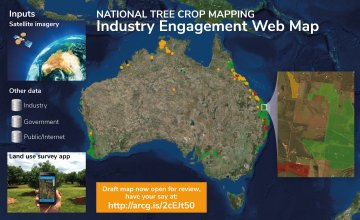
Click here to view the Australian Tree Crop Rapid Response Map, part of a $3.4 million project from the Australian Government’s Rural R&D for Profit program.

This project will help macadamia, avocado and mango growers make important decisions around fruit and nut quality and yield, and monitor tree health including early detection of pests and disease outbreaks.

To find out more, you can read the Australian Government media release by clicking here and the Hort Innovation release here.

The Australian Tree Crop Response Map displays the location and extent of all commercial avocado, macadamia and mango orchards in Australia. This will assist natural disaster recovery efforts and biosecurity planning and responses, and together with other components (developed in the wider project discussed below) help growers and industry make important decisions on-farm. You can read more here.

The background

A collaborative team from four universities, government agencies, industry partners, grower groups and commercial providers have developed a new interactive web map of selected horticulture tree crops across Australia. The draft mapping integrates satellite imagery with industry and government data, regional surveys and on-ground evaluations to map the location and area of every commercial (>2ha) avocado, macadamia and mango orchard across Australia.

Launched earlier this month and now open for review, the Industry Engagement Web Map provides stakeholders, growers and experts from the avocado, macadamia and mango industries an opportunity to review and improve the draft map.


How will the Web Map be used?

The Web Map and its associated data will be used by industry to develop a better understanding of changes in Australian avocado production regions. Such information supports improved marketing decision-making and underpins improved biosecurity and post natural disaster response and monitoring.

For example, in the event of a disease outbreak industry groups can access the map and know exactly where surrounding crops are and quickly develop management strategies. The product can also be used to map disasters like floods, fires and cyclones and speed up applications for recovery assistance. In fact, the map is already providing critical information to the natural disaster response and recovery effort in the wake of the devastating Category 4 Tropical Cyclone Debbie which crossed the Queensland coast on Tuesday 28th March.


How you helped

Stakeholders viewed the draft mapping, comparing it with their own local knowledge and providing comments and feedback. Comments were submitted if the information was missing, incorrect or misclassified using an easy pop-up window with predefined options in drop-down menus live within the Web Map.

Stakeholders also used the free Land Use Survey app (iOS and Android) to inform the classification of tree crops by capturing GPS-coded point observations and photos. Comments and data collected via the map and app will be interpreted before the final mapping products are compiled and released in 2017.


Australia’s multiscale monitoring tools for managing Australian tree crops project

The Web Map is the first component of Multi-scale monitoring tools for managing Australian tree crops project, an ambitious project that combines innovative technologies such as satellite mapping, laser scanning and on ground robotics with citizen science apps to deliver improved industry information and methods of monitoring tree health, productivity and quality.

The project was funded through the Australian Government’s Rural Research and Development (R&D) for Profit Grants Programme, managed by Hort Innovation and coordinated by the University of New England. The success of the project can be attributed to the multi-disciplinary team from industry, research/academia and government, including The University of Queensland, University of Sydney, Central Queensland University, Agtrix Pty Ltd, the Queensland Department of Agriculture and Fisheries, Queensland Department of Science, Information Technology and Innovation, Simpson Farms Pty Ltd, Avocados Australia, Australian Macadamia Society and Australian Mango Industry Association.