2026 Central NSW Regional Avocado Growers Forum recap


That’s a wrap for this year’s Central NSW Regional Avocado Growers Forum!

How can avocado growers build more resilient orchards and improve fruit quality?

That was the driving question behind this year’s Central NSW Regional Avocado Forum in Port Macquarie.

Growers, presenters and industry stakeholders came together for a practical program that explored:

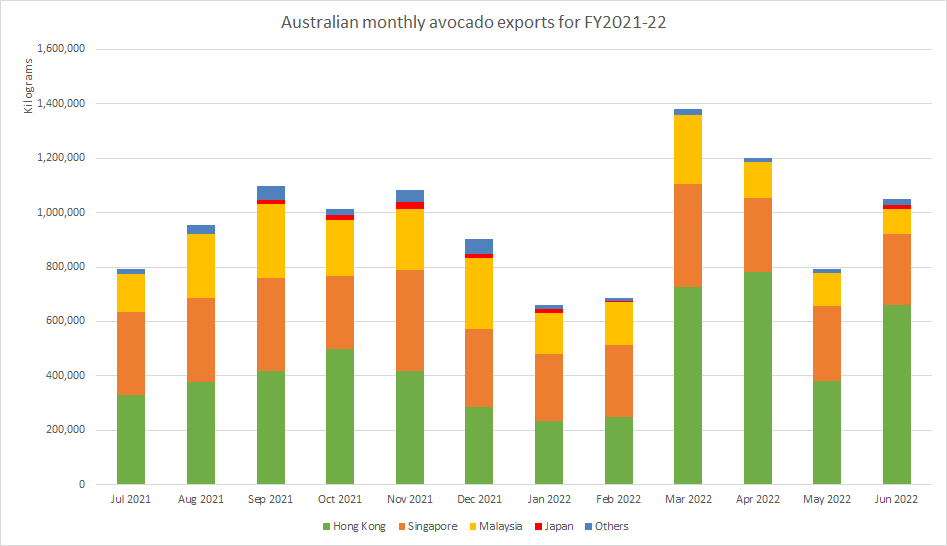
  • latest updates on national production, market growth and export trends
  • the new avocado pest & disease project – an update on where it’s up to and what it will deliver for growers.
  • fly pollination research and the potential for alternative managed pollinators to support avocado production.
  • fruit robustness with how the balance between calcium and nitrogen can influence fruit quality and improve resilience.
  • what data can help growers understand orchard performance, costs and profitability.

Grower discussions during the round robins created valuable opportunities for peer-to-peer learning and sharing practical insights from across the region.

A special shout-out

Thank you to Hugh Littlefield from Local Land Services for going above and beyond to help a group of Central Coast growers travelling more than four hours attend the forum. In the spirit of bringing people together, Hugh organised an overnight trip with sponsored transport, accommodation and meals, making it possible for the group to take part, connect with others and be part of the event.

A big thank you to everyone who contributed to the discussion throughout the day, KMH Avocados for hosting the orchard walk at Cooperabung, and our presenters Jay Anderson, Raylea Rowbottom, Stuart Irvine-Brown and James Beveridge.

Acknowledgements

The avocado industry development and extension project (AV23010) has been funded by Hort Innovation, using the avocado research and development levy, co-investment from the Queensland Department of Primary Industries, Western Australian Government Department of Primary Industries and Regional Development, New South Wales Department of Primary Industries, and contributions from the Australian Government. Hort Innovation is the grower-owned, not-for-profit research and development corporation for Australian horticulture.


This article appears as part of the 22 May 2026 issue of Guacamole, our e-Newsletter.

Australian Avocados QSR Foodservice Handbook launched


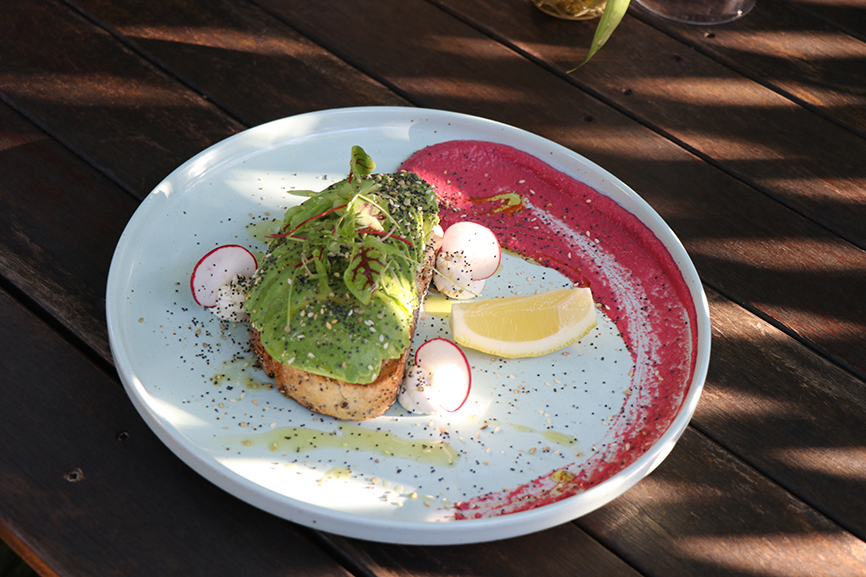
The Australian Avocados QSR Foodservice Handbook – now available!

We are excited to share the Australian Avocados QSR Foodservice Handbook.

This comprehensive resource has been developed to help quick-service restaurants use avocados more profitably and efficiently, reducing waste, improving consistency and unlocking higher-value menu opportunities.

The handbook equips chefs, franchisees, operators and crew with practical guidance across key operational areas, including:

  • supply windows
  • grading standards
  • storage and ripeness management
  • prep techniques
  • yield optimization
  • cost-per-serve modelling
  • creative menu applications
  • full nutritional information for both varieties.

Highlights include data showing avocados can deliver up to 78% gross profit as a menu add-on.

The handbook will be used as an educational resource at upcoming chef masterclasses hosted by Australian Avocados and the industry is encouraged to share it with any relevant stakeholders to help elevate QSR menus with Australian avocados.

Acknowledgements

This activity is funded by Hort Innovation, using the avocado marketing levy.


This article appears as part of the 22 May 2026 issue of Guacamole, our e-Newsletter.

NFF Horticulture Council holds workshop to streamline compliance


NFF Horticulture Council workshop highlights opportunities to streamline compliance

The National Farmers’ Federation Horticulture Council brought together growers, industry bodies, certification organisations, auditors and other fresh produce stakeholders at an in-person workshop in  Canberra on 25 March, 2026. They discussed how market-driven compliance can work more effectively across Australian horticulture.

The workshop builds on the Council’s discussion paper, Aligning an Ensemble: Opportunities for Tuning Market-Driven Compliance for Greater Harmony, and focused on practical, long-term opportunities to improve efficiency, effectiveness and sustainability.

Key takeaways

Participants developed a stronger shared understanding of how compliance confidence is created across the supply chain, and of the different roles played by growers, auditors, certification bodies, standard owners, retailers and benchmarking organisations.

Discussions also highlighted that current arrangements, while well-intentioned and often effective at managing risk, have developed over time without overall coordination, contributing to duplication, inconsistency and unnecessary cost – especially for suppliers.

Opportunities identified

The workshop identified several priorities for improving alignment across the system, including:

  • potential consolidation or closer alignment of emerging retail requirements where goals are similar but expressed in different ways
  • reduced conflict between international benchmarks and Australian law, policy and practice, while maintaining global credibility.

Participants noted that progress will require action across domestic and international settings, standards governance, audit practices and supply-chain relationships.

Supplier coordination a clear priority

A strong consensus emerged that suppliers need to be better coordinated in advancing shared interests. Participants agreed this is the most important enabling step for progress on both domestic and international compliance issues.

The workshop resolved that supplier representative bodies, including the NFF Horticulture Council and other relevant organisations, should convene to establish an industry-led working group to identify common priorities, develop shared positions and pursue practical progress collaboratively.

Participants also emphasised that input from across the compliance value chain—including certification bodies, standard owners and other key stakeholders—will be important to the group’s long-term effectiveness.

What happens next

The workshop did not make formal decisions on specific reforms, but participants strongly supported continued collaboration. The NFF Horticulture Council will keep engaging with attendees and representative bodies to help establish agreed next steps.


This article appears as part of the 22 May 2026 issue of Guacamole, our e-Newsletter.

Bruisin’ while choosin’ consumer education campaign


Are you bruisin’ while choosin’?

Renowned strongman and singer Eddie Williams can lift gigantic rocks, but when he checks an avocado at the shops, he knows he’s got to be soft.

A brilliant new consumer education campaign starring Eddie has been launched by Australian Avocados to educate consumers on how to select ripeness of avocados.

Where can we see the new campaign?

Eddie launched the Are You Bruisin’ While Choosin’ song on The Morning Show and showed Aussies how to correctly check an avocado for ripeness.

You can watch his video clip on Australian Avocado’s website, like and share it on Instagram,  Facebook and YouTube. Paid support will start in early July.

The campaign message will be amplified over the coming months across digital screens at shopping centres and digital media outlets.

Eddie has also been hitting the streets to test how people check avocados for ripeness and show them the right way to do it in fun Instagram vox pop videos.

A partnership with chef Tom Walton will also help spread the message across social media, showing people how to choose avos correctly so they get a great eating experience at home.

The Australian Avocados website will feature a dedicated campaign landing page with key messages, an interactive education tool and videos.

Coverage

To date, the campaign has seen 164 pieces of coverage (31 unique) across TV, radio and online, generating over 17.6 million opportunities to see the content.

Highlights include:

TV

Online

Radio

  • ABC Hobart – 46,000 Reach
  • ABC Newcastle
  • ABC Upper Hunter
  • ABC Riverland
  • 2GB – 664,000 Reach
    • Syndicated x1 to:
      • 2CC – 20,000 Reach
    • ABC Newcastle – 99,000 Reach
      • Syndicated x1 to:
        • ABC Upper Hunter – 15,000 Reach
      • ABC Riverland – 24,855 Reach

Acknowledgements

This activity is funded by Hort Innovation, using the avocado marketing levy.


This article appears as part of the 22 May 2026 issue of Guacamole, our e-Newsletter.

Announcing Avocados Australia\’s new CEO


Announcing our new CEO: Mr. Milton Bazley

The Board of Avocados Australia Limited (AAL) is pleased to announce the appointment of Mr Milton Bazley as the incoming Chief Executive Officer.

Milton formally commenced with AAL on 5 May 2026, allowing for a transition period alongside outgoing CEO Mr John Tyas, who will remain with us until he retires in the first week of July.

About Milton Bazley

Milton brings more than 30 years of experience across agribusiness, food manufacturing, and global commodity trade. He has held senior leadership roles with organisations including SunRice, where he led international trading and export operations across Asia, the Pacific, Europe and the Middle East, managing large-scale commercial portfolios and complex market access arrangements.

His experience includes developing and executing export strategies, building international partnerships, and working closely with government and industry stakeholders.

If Milton can successfully sell rice into highly competitive markets such as Japan and South Korea, we are excited to see what he can achieve for the Australian avocado industry.

In addition to his professional credentials, Milton is widely regarded within the industry as a collaborative and highly personable leader. We are confident he will work closely with the AAL team to build on the organisation’s strong capability and culture.

This transition period will support a seamless handover, ensuring continuity of leadership and enabling Milton to gain a thorough understanding of the organisation, its stakeholders, and the broader avocado industry.

Thank you and best wishes, John

The Board also wishes to sincerely thank John Tyas for his excellent efforts over the past 14 years. Under his leadership, Avocados Australia has grown from a relatively small organisation into one that supports growers in every way possible. We remain committed to continuing this progress and to further enhancing the value and benefits delivered to our member growers.

We look forward to working with Milton as he leads AAL into its next phase.

Further updates will be provided in due course.

– Avocados Australia Chair, Matt Kleyn


This article appears as part of the 8 May 2026 issue of Guacamole, our e-Newsletter.

Shelf-life calculator launched on BPR


New avocado shelf-life calculator out now!

The Queensland Department of Primary Industries has released a new avocado shelf-life calculator designed to help industry deliver more consistent, high-quality fruit to consumers.

Developed by Boyd Tarlinton and Neil White through the Serviced Supply Chains II project (AM21000), the Fresh Intel calculator is an online decision-support tool built on extensive shelf-life modelling. It allows growers and supply chain partners to test “what-if” scenarios and better understand how different factors influence remaining shelf life.

Users can tailor scenarios by selecting avocado varieties, production regions, fruit maturity, size, and handling conditions along the supply chain. The tool provides practical insights to support more informed decision-making, helping businesses manage supply chain risks and disruptions while improving consistency and reducing waste.

The calculator is now available to Australian producers and exporters on the BPR

Learn more

For more information or to discuss how this tool could benefit your business, please contact Andrew Macnish.

Access the calculator

You can find the shelf-life calculator in our Best Practice Resource

You will need to be logged in to access it.

Acknowledgements

The Serviced Supply Chains II project (AM21000) is funded by the Hort Innovation Frontiers Fund, Avocado and Strawberry research and development levy, and contributions from the Australian Government, with co-investment from the Department of Primary Industries, Queensland (DPI), Department of Energy, Environment and Climate Action, Victoria (DEECA), Department of Agriculture and Fisheries, Northern Territory (DAF), Department of Primary Industries and Regional Development, Western Australia (DPIRD), Pinata Farms Pty Ltd and Summerfruit Australia Ltd. Hort Innovation is the grower-owned, not-for-profit research and development corporation for Australian horticulture.


This article appears as part of the 8 May 2026 issue of Guacamole, our e-Newsletter.

Pest and Disease Management Program for the Australian Avocado Industry (AV23017) update


Tackling emerging pests and diseases in avocado production – a project update

Pests and diseases continue to be major constraints on avocado productivity and fruit quality.

Led by Dr Bishwo Mainali Macquarie University, a research team from around Australia are working together to address these challenges through the Pest and Disease Management Program for the Australian Avocado Industry (AV23017) – delivering targeted research, monitoring, and practical solutions for growers.

Two key approaches to tackle pests and diseases

This research project has two key focus areas:

  1. Improving best-practice chemical use and resistance management, including:
  • identifying gaps in available control options
  • supporting market access through updated maximum residue limit (MRL) information.
  1. Better understanding emerging and established pest and disease issues. Current work targets pests including the mirids and thrips, and diseases like anthracnose, stem-end rot, and panicle and branch dieback.

A nation-wide team and diverse expertise to target local issues
Macquarie University (MQ) is leading the work, with the New South Wales Department of Primary Industries and Regional Development (NSW DPIRD), Agreco Australia, and Southern Cross University (SCU) contributing expertise and on-ground support across different components.

The MQ team and the NSW DPIRD team, led by Dr. Saleh Adnan,  are collaborating to monitor pest dynamics and evaluate insect pest trap performance across Northern NSW, Central Queensland, and Far North Queensland.

For the disease component, the Agreco Australia team, led by Dr. Cherie Gambley, and the SCU team, led by Dr. Jay Anderson, are working together to better understand the drivers of anthracnose through spore trapping in commercial orchards across Central Queensland and Northern NSW.

The team has begun engaging with Western Australian growers and will shortly commence trap deployment in WA avocado orchards to expand the project’s geographic coverage.

Pictured: Traps installed

Status updates from around the country

The project is now partway through its first full season. Fruit from monitored orchards will be harvested and assessed at maturity to examine links between disease incidence, spore release, weather conditions, and orchard management factors. Monitoring activities for both pests and diseases are also planned to commence in Western Australia from the next flowering period.

When pest insects are active

Monitoring across Northern NSW and Queensland in 2025 shows that pest pressure is closely linked to crop phenology. In Northern NSW, Citrus Blossom Bug (CBB) and thrips peak during early flowering, particularly from inflorescence elongation to flower opening, highlighting this as the critical window for monitoring and control.

Disease pressure remains high

Fruit surveys (fruiting season 2025) confirm that anthracnose remains widespread, with an incidence of >50% across assessed sites. Stem-end rot was especially severe in Central Queensland (44–81%), while impacts were lower in Northern NSW.

Improving disease detection

Spore trapping is underway to better link disease risk with orchard conditions. However, challenges with traditional methods have prompted exploration of modern tools, such as eDNA-based detection, which are expected to improve reliability and early-warning capability.

Dieback under investigation

Panicle and branch dieback are emerging concerns in several regions, including Bundaberg. Current work focuses on identifying causal agents and understanding their distribution through field surveys and DNA-based diagnostics.

Better monitoring tools

Trials are underway to identify the most effective sticky trap colors for pests such as thrips and mirid bugs. For thrips, lures are also deployed alongside the coloured traps to improve monitoring accuracy and support timely management decisions.

Have your say

Grower input is critical to ensure the project delivers practical outcomes. We will soon be seeking feedback, particularly on experiences with emerging pests and panicle and branch dieback.

Keep an eye out for the survey and get involved!

More information

To learn more about the project, please email:

Acknowledgements

The Pest and Disease Management Program for the Australian Avocado Industry (AV23017) project has been funded by Hort Innovation, using the avocado research and development levy and contributions from the Australian Government. Hort Innovation is the grower-owned, not-for-profit research and development corporation for Australian horticulture.


This article appears as part of the 8 May 2026 issue of Guacamole, our e-Newsletter.

Young Horties 1st birthday competition


Young Horties turns 1

If you haven’t heard of them already, Young Horties is Australia’s first national network created specifically for all young people working across hort.

Learn more about the Young Horties on LinkedIn

Enter their 1st birthday competition!

The Young Horties want you to join in on their birthday fun, with great prizes up for grabs.

Contact Ebony for more information.

Hort IQ insights March 2026 update


Latest insights live on Hort IQ

The latest insights for the avocado industry are now live on Hort IQ, including data up to 22 March, 2026.

Key findings

🥑 Avocados continue to be a staple in Aussie households, with over three quarters of households purchasing them an average of 15 times over the year.

💰 Volume surged while dollar sales grew more modestly, as average prices fell sharply across the year.

📈 Growth was driven by more households buying, plus more trips and heavier baskets (average annual purchase volumes up by ~2kg per household vs last year)

🌐 Online was a standout, with avocado sales growing almost 6x faster than physical stores, and online now accounting for ~8% of the avocado market.

You can find the full insights on HortIQ.

Haven’t signed up yet?

Access is free for growers, Hort Innovation members and peak industry bodies!

Hort IQ is a platform designed:

  • to help you stay informed, stay competitive and stay ahead
  • for powerful consumer and customer insights across the Australian horticulture industry.

Register today to start accessing insights!

Learn more and register for Hort IQ


This article appears as part of the 8 May 2026 issue of Guacamole, our e-Newsletter.

End Food Waste & Hort Innovation survey


Have your say to help growers unlock value in every harvest

What are the top 3 cosmetic specifications that cause the most downgrades for your crop?

If you’re a grower or industry stakeholder, you’re invited to complete a short survey to share which cosmetic specifications most commonly cause lost revenue and crop loss.

Your input will contribute to a new research project led by End Food Waste Australia and Hort Innovation helping growers unlock value in every harvest.

Learn more and complete the survey


This article appears as part of the 8 May 2026 issue of Guacamole, our e-Newsletter.